














Introduction: A Market Expanding Beyond Traditional Boundaries
The PPE market in the Americas has moved into a new phase of development. While demand surged during the global health crisis, the current growth pattern is no longer driven by short-term events. Instead, it reflects a broader shift in how industries approach workplace safety, hygiene control, and regulatory compliance.
From the United States and Canada to emerging markets in Latin America, the need for reliable personal protective equipment (PPE) continues to grow across multiple sectors.
Market Size and Growth Outlook in the Americas
The Americas represent one of the most established regions for PPE consumption, supported by strong healthcare systems in the north and expanding industrial activity in Latin America.
Industry projections suggest that the PPE market in the Americas will maintain steady growth over the coming years, with an expected compound annual growth rate (CAGR) of approximately 6%–8%.
This growth is supported by:
- Increasing investment in healthcare infrastructure
- Expansion of manufacturing and logistics sectors
- Strengthening workplace safety regulations
- Rising awareness of hygiene practices in food production
Unlike earlier demand cycles, current growth is more stable and less dependent on emergency procurement.
Key Industries Driving PPE Demand
Healthcare and Medical Use
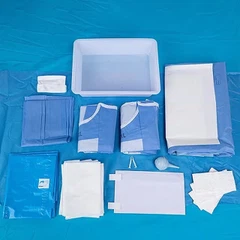
Healthcare remains one of the largest consumers of PPE products. Hospitals, clinics, and long-term care facilities require a continuous supply of items such as:
- Disposable gowns
- Disposable Coveralls
- Medical masks
- Gloves
- Shoe covers
The focus has shifted toward consistent supply and certified quality, rather than short-term volume purchasing.
Food Processing and Hygiene-Control Environments
The food industry has become an increasingly important driver of PPE demand across the Americas.
Stricter hygiene standards require workers to use disposable protective products, including:
- Disposable shoe covers
- Sleeve covers
- Lightweight gowns
In these environments, PPE is not only used for worker protection but also for preventing cross-contamination during production and packaging processes.
Industrial and Manufacturing Sectors
In Latin America, industrial expansion is contributing to steady PPE consumption. Manufacturing, construction, and logistics operations rely on protective equipment to meet workplace safety standards.
This segment values:
- Durability
- Cost-efficiency
- Reliable bulk supply
Why Disposable PPE Is Gaining Momentum ?
Across the Americas, there is a noticeable shift toward disposable PPE products.
Compared with reusable alternatives, disposable items offer several practical advantages:
- Reduced risk of contamination
- No need for cleaning or maintenance
- Consistent performance in each use cycle
This is particularly relevant in environments where protective equipment must be changed frequently, such as hospitals and food processing facilities.
Products like disposable CPE gowns and CPE shoe covers are increasingly used because they provide a reliable barrier while remaining cost-effective for large-scale use.
Manufacturers such as CARESTAR, with experience in disposable medical and protective products, are adapting to this demand by focusing on stable production capacity and consistent material quality.