











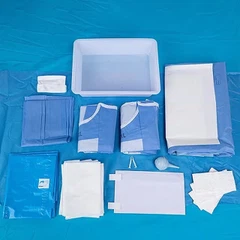




During clinical procedures, whenever splatters, splatters, sprays, and blood or aerosols occur, stomatologists must wear surgical gowns. Scrubs should be long-sleeved to protect the wrists and forearms. They should also cover the torso from the neck to the knees and wrap around the back to prevent contaminating the clothing. Work clothes, clinical and laboratory coats or jackets worn for comfort and professional purposes do not use ppe.
Surgical gowns belong to the second category of medical devices, which can be used once or repeatedly. The water repellency and aperture size of the fabric affect blood penetration and benefit the performance of the surgical gown. Whatever materials are used to make surgical gowns, they must be able to resist the penetration of liquids and microorganisms. Oral health care facilities should provide surgical gowns in different sizes to ensure appropriate coverage for all staff.
Gowns should be changed between patients, as soon as possible when blood or OPIM permeates, and before leaving the patient's care area. Surgical gowns should be designed to avoid contaminating the air, environmental surfaces, and contact with patients and health care workers. Used disposable or reusable protective clothing should be placed in designated containers to isolate contaminated areas.