










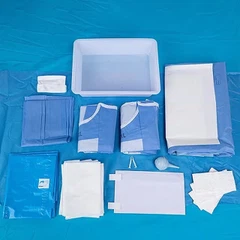


By covering the area around the surgical wound to prevent microbial invasion of the sterile field, further complications are avoided.
After the sterilized skin is prepared, the surgical towel is placed at the surgical site to maintain a sterile environment and prevent contact with untreated surfaces. One of their most important features is the sealing of the fluid. Other requirements for sterile disposable surgical layup include resistance to microbial (dry and wet) penetration, absorbency, resistance to liquid penetration, and tensile strength.
Since microbes on a patient's skin are a major source of contamination, the use of overhang materials plays a key role in reducing infections and improving patient outcomes. Surgical gauze creates an effective physical barrier to prevent the transfer of microorganisms from the patient and the surrounding environment to the wound.
Surgical paving sheets (made of non-porous materials) are designed for cardiovascular and angioplasty procedures to provide effective infection control, with effective fluid control to maintain dry work areas. This is because body fluids and rinsing fluids come into contact with the gauze during surgery, and when the gauze becomes moist or damp, the risk of pathogen transmission increases.