












Footwear can carry dust, dirt and other contaminants from one area to another. In workplaces where cleanliness is part of daily operations, managing what enters a room is an important part of maintaining a controlled environment.
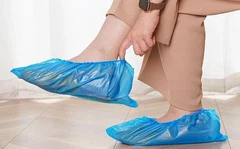
Disposable shoe covers offer a simple way to cover everyday footwear when employees, visitors or contractors enter designated areas. Among the available disposable options, CPE shoe covers are commonly selected for applications that require a lightweight, water-resistant covering that is convenient to put on and remove.
Their use is not limited to hospitals. CPE shoe covers can also be found in food processing facilities, laboratories, manufacturing plants, maintenance areas and other workplaces with defined cleanliness procedures.
This article looks at where CPE shoe covers are used, what practical advantages they offer and what buyers should consider when selecting them for different working environments.
1. Healthcare Facilities: Supporting Everyday Hygiene Procedures
Hospitals and healthcare facilities contain areas with different hygiene requirements. Patient rooms, examination rooms, treatment areas and certain support spaces may have procedures for controlling footwear and the movement of personnel.
Disposable CPE shoe covers can be used by healthcare workers, maintenance staff and visitors when facility procedures require footwear to be covered.
Typical applications include:
- Patient rooms and designated clinical areas
- Examination and treatment rooms
- Medical support areas
- Healthcare facility maintenance
- Visitor access to designated spaces
The main value of CPE shoe covers in these settings is convenience. They are lightweight, easy to distribute and designed for single-use applications. Their water-resistant material can also help limit direct contact between footwear and ordinary splashes or wet floor contaminants.
However, shoe covers are only one part of a facility's infection prevention and environmental hygiene procedures. They should not be treated as a substitute for hand hygiene, surface cleaning or other required protective equipment.
2. Food Processing and Food Packaging: Managing Footwear in Production Areas
Food production facilities often divide their premises into different operational zones. Employees may move between changing rooms, processing areas, packaging sections, storage spaces and corridors.
Footwear management is one element of a broader hygiene program. Depending on the facility's procedures, disposable CPE shoe covers may be used when personnel enter designated production or support areas.
Potential applications include:
- Food preparation and processing rooms
- Food packaging areas
- Ingredient handling zones
- Inspection and quality-control areas
- Temporary visitor access to production facilities
CPE film provides a water-resistant covering for footwear, which can be useful in work areas where ordinary moisture and splashes are present. Its disposable design also makes it convenient to replace shoe covers when moving between designated areas, where site procedures require a change.
For food-related operations, buyers should assess the complete hygiene program rather than relying on shoe covers alone. Product suitability, handling procedures and any food-contact or regulatory requirements should be confirmed for the intended application.
3. Laboratories: A Convenient Footwear Covering for Controlled Work Areas
Laboratories may handle samples, equipment and materials that require controlled housekeeping practices. Different laboratories have different entry requirements, so footwear policies should be based on the actual work being performed.
Disposable CPE shoe covers may be used in selected laboratory environments, including:
- General testing laboratories
- Inspection and quality-control rooms
- Sample preparation areas
- Research support spaces
- Designated clean work areas
The lightweight construction makes CPE shoe covers convenient for short-term use by staff and visitors. Their disposable format can also support site-specific procedures for changing footwear coverings when entering or leaving designated areas.
Not every laboratory requires the same level of footwear protection. Where chemical resistance, biological protection, antistatic performance or cleanroom particle-control performance is required, buyers should request relevant test data and select products specifically validated for those requirements.
4. Cleanrooms and Controlled Environments: Part of a Larger Garment System
Cleanrooms and other controlled environments often have strict gowning and entry procedures. Depending on the cleanliness classification and process requirements, personnel may need dedicated footwear, shoe covers or other protective garments.
CPE shoe covers may be considered for certain general cleanliness-control applications. However, ordinary CPE shoe covers should not automatically be described as cleanroom-certified or suitable for high-classification cleanrooms.
Before selecting a product, buyers should check:
- The cleanroom classification and site entry procedure
- Whether particle generation has been evaluated
- Whether the product has relevant cleanliness test results
- Whether dedicated cleanroom footwear is required
- Whether the shoe cover is compatible with the facility's gowning system
For environments with strict contamination-control requirements, product claims should be supported by appropriate test reports rather than material descriptions alone.
5. Industrial Manufacturing: Keeping Work Areas Cleaner
Manufacturing facilities often include production lines, inspection rooms, laboratories, offices and customer visit areas. Employees and visitors may move between spaces with different housekeeping requirements.
CPE shoe covers can be used in selected areas where companies want to reduce the transfer of ordinary dirt and moisture on footwear.
Examples include:
- Assembly and inspection areas
- Equipment maintenance rooms
- Product display and demonstration areas
- Indoor production support spaces
- Designated visitor routes
Their lightweight, disposable format makes them practical for temporary use. Different colors may also help companies distinguish visitor supplies or identify specific work zones when this forms part of an established site procedure.
For industrial environments involving oils, solvents, sharp objects, high temperatures or other specific hazards, standard disposable CPE shoe covers should not be assumed to provide the required protection. The application must be assessed against the actual hazard.
6. Facility Maintenance and Visitor Management
Not all applications involve production or clinical work. Facility managers, property operators and service contractors may also use disposable shoe covers to help keep selected indoor spaces clean.
Common situations include:
- Indoor equipment inspection
- Building maintenance
- Clean office or showroom access
- Property viewing and service visits
- Temporary contractor access
- Customer visits to manufacturing facilities
In these situations, disposable shoe covers provide a convenient covering that can be issued at the entrance and removed after the visit. They are particularly useful where visitors are not expected to change into dedicated work footwear.
Why Choose CPE Shoe Covers?
The suitability of a shoe cover depends on the work environment, the required level of protection and the product's actual specifications. CPE shoe covers offer several practical characteristics for everyday disposable footwear-covering applications.
Water-Resistant CPE Film
CPE is a polyethylene-based material with a characteristic textured film surface. It provides a water-resistant covering that can help limit direct contact between footwear and ordinary moisture or splashes.
This does not mean that every CPE shoe cover is suitable for chemical exposure, prolonged liquid contact or hazardous-material protection. Those applications require product-specific evaluation.
Lightweight and Convenient to Wear
CPE shoe covers are designed to be lightweight and easy to put on and remove. This is useful in workplaces where staff and visitors need a temporary footwear covering without changing their regular shoes.
Disposable for Routine Hygiene Management
A single-use design allows facilities to replace shoe covers according to their internal procedures. This can be practical for visitor management and designated area-entry routines.
Multiple Weight and Size Options
Different weights and dimensions can affect the fit, coverage and handling characteristics of a shoe cover. Buyers should compare the actual product specifications with the footwear commonly worn at their facility.
A higher material weight does not, by itself, prove better overall performance. Fit, construction, material consistency and application requirements also matter.