












Footwear is an often-overlooked part of workplace hygiene. Shoes move between corridors, production areas, changing rooms, outdoor spaces and controlled work zones throughout the day. Without appropriate entry procedures, dirt, moisture and other contaminants carried on footwear can be transferred from one area to another.
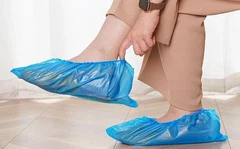
Disposable CPE shoe covers provide a practical option for workplaces that need temporary footwear coverage as part of their hygiene management procedures.
Made from chlorinated polyethylene, CPE shoe covers are commonly selected for their water-resistant material, flexible construction and convenient single-use format. Their suitability, however, depends on the specific product design and the conditions in which they are used.
From healthcare facilities to food manufacturing plants, laboratories and industrial workshops, understanding the requirements of each working environment helps organizations choose the appropriate shoe cover specification.
1. Healthcare Facilities: Managing Footwear Hygiene in Clinical Areas
Hospitals and healthcare facilities contain different functional zones, including patient rooms, examination areas, treatment rooms, corridors and designated clean areas.
Footwear can carry dust, dirt and moisture between these locations. Where facility procedures require footwear coverage, disposable shoe covers can help reduce the transfer of contaminants on the outside of shoes.
CPE shoe covers are particularly worth considering in areas where occasional contact with water or liquid splashes is part of normal operations.
Typical applications include:
- Designated clinical access areas
- Patient examination rooms
- Medical equipment maintenance areas
- Hospital visitor access zones
- Selected healthcare support areas
The required level of protection varies by department. Shoe covers should be selected according to the facility's infection prevention procedures rather than assumed to provide sterile protection.
For healthcare procurement teams, important product considerations include material consistency, opening fit, dimensions, packaging hygiene and compatibility with the facility's other PPE requirements.
2. Food Processing: Keeping Footwear Consistent With Hygiene Procedures
Food processing facilities often operate with clearly defined hygiene zones. Employees may move between changing rooms, raw-material handling areas, processing lines, packaging departments and finished-product storage.
Footwear management is one component of controlling the movement of contaminants between these areas.
Disposable CPE shoe covers can be used in designated locations where temporary footwear coverage is required by the facility's procedures.
Typical applications include:
- Food preparation areas
- Food packaging departments
- Processing support rooms
- Designated visitor routes
- Selected wet-cleaning areas, subject to product suitability
In facilities with regular floor washing, a water-resistant CPE material can be a practical option. However, buyers should distinguish between water resistance and protection against all workplace liquids or chemicals.
Another consideration is the condition of the floor. Some CPE shoe cover designs feature a textured sole surface. Where this feature is required, buyers should confirm the actual surface construction and evaluate its performance under the relevant floor conditions.
A textured appearance alone does not establish a particular slip-resistance rating.
For food manufacturers, the selection process should also consider whether the shoe cover is compatible with the site's footwear policy, cleaning procedures and applicable food hygiene requirements.
3. Laboratories: Supporting Controlled Entry Procedures
Laboratories may handle samples, reagents, equipment and materials that require controlled working conditions.
Footwear can introduce external dirt and particles into designated work areas. For this reason, some laboratories establish entry procedures that include disposable protective clothing and footwear coverage.
CPE shoe covers may be considered for:
- General laboratory access
- Sample preparation support areas
- Equipment inspection areas
- Laboratory visitor procedures
- Designated clean working spaces
The exact product requirements depend on the laboratory's activities.
For example, a general testing laboratory may have different requirements from a facility handling sensitive biological samples or hazardous chemicals.
Buyers should assess the intended application before selecting the material. Standard CPE shoe covers should not automatically be considered suitable for chemical splash protection, biological containment or specialized cleanroom requirements without relevant product-specific evidence.
Where particulate control is important, the laboratory should also evaluate the material, product construction and any applicable particle or cleanliness documentation.
4. Cleanrooms and Pharmaceutical Manufacturing: Footwear as Part of a Larger Gowning System
In cleanroom and pharmaceutical environments, contamination control involves more than one item of PPE.
Employees may follow a gowning sequence that includes dedicated garments, head covers, face masks, gloves and footwear protection. Each component has a defined role within the site's contamination-control procedure.
Disposable CPE shoe covers can be considered for certain entry and support areas, depending on the cleanroom classification and product requirements.
Common considerations include:
Material and particle characteristics
The facility should verify whether the selected shoe cover meets its requirements for particle generation and cleanliness. A plastic material should not automatically be described as cleanroom-certified.
Fit and coverage
The cover should remain correctly positioned over the footwear during normal movement. The opening and dimensions should be evaluated using the actual footwear worn by employees.
Packaging and handling
Packaging should be compatible with the site's storage, gowning and handling procedures. Facilities with strict contamination controls may require additional packaging or product documentation.
Compatibility with the gowning procedure
Shoe covers must be evaluated alongside other protective garments. The order of dressing and the method of putting on and removing footwear protection should follow the facility's established procedure.
For pharmaceutical procurement teams, the key is to match the product specification to the documented environmental requirements rather than relying on a general product description.
5. Industrial Manufacturing: Protecting Work Areas During Daily Operations
Industrial workplaces frequently involve movement between production floors, inspection areas, maintenance rooms and administrative spaces.
Workers, contractors and visitors may need temporary footwear protection when entering areas with specific cleanliness requirements.
Disposable CPE shoe covers can be considered for:
- Production-area visitor access
- Equipment inspection
- Facility maintenance
- Selected assembly operations
- Indoor areas where external footwear contamination needs to be controlled
Their disposable format makes them convenient for temporary access procedures. Workers can use a fresh pair when entering a designated area and dispose of it according to the site's waste-management instructions.
For industrial applications, product selection should take account of the actual footwear. Safety shoes and larger work boots may require different dimensions from ordinary indoor footwear.
A suitable fit is important because a cover that is too tight may be difficult to put on, while one that is too loose may shift during movement.
It is also important to distinguish general footwear coverage from specialized industrial foot protection. Disposable shoe covers do not replace safety footwear, protective toe caps or other equipment required by the workplace risk assessment.
6. Facility Maintenance and Visitor Management: A Practical Single-Use Option
Not every application involves a production line or controlled environment.
Building maintenance contractors, inspection teams, real estate professionals and service personnel may need to enter occupied buildings while minimizing the dirt and moisture transferred by outdoor footwear.
Disposable CPE shoe covers can provide a convenient temporary covering option for:
- Building inspections
- Indoor maintenance visits
- Property viewing appointments
- Equipment servicing
- Contractor access
- Selected renovation and cleaning activities
In these situations, ease of use and compatibility with different shoe sizes are important considerations.
For organizations that regularly receive visitors, a consistent shoe-cover procedure can also make access requirements easier to communicate and manage.
The appropriate product should be selected according to the environment. Where sharp debris, heavy mechanical work or hazardous substances are present, ordinary disposable shoe covers may not provide the protection required.
WHY Choosing CARESTAR CPE Shoe Covers ?
CARESTAR provides disposable CPE shoe cover options for buyers serving healthcare, food processing, laboratory and industrial markets.
The product range includes different models and configurations. Buyers can review the CARESTAR CPE Shoe Cover category to explore available products and identify a suitable starting specification.
For example, the CARESTAR CPE Shoe Cover is one of the listed product options. Buyers should review the individual product specifications and confirm the material, dimensions, weight, surface construction and packaging before placing an order.
For organizations sourcing disposable footwear protection in bulk, confirming the approved sample and specification is an important part of maintaining consistency between orders.
The right shoe cover is ultimately the one that matches the workplace's actual requirements, fits the intended footwear and can be supplied against a clearly defined product specification.