






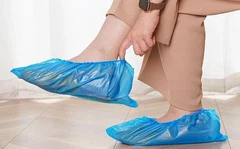





Disposable shoe cover is often treated as a simple protective layer between footwear and the working environment. In practice, however, the design of the shoe cover can affect much more than cleanliness.
In areas where floors may become wet, dusty, oily, or contaminated, slip resistance is an important consideration when selecting disposable shoe covers. A shoe cover that fits well but provides poor contact with the floor may create an unnecessary safety concern.
CPE shoe covers are widely used because chlorinated polyethylene provides a combination of waterproofing, flexibility, and mechanical durability. When the material is combined with an appropriate sole texture and a secure fit, CPE shoe covers can provide more stable contact between the worker's footwear and the floor.
What Makes a CPE Shoe Cover Slip Resistant?
Slip resistance is primarily about how effectively the bottom of the shoe cover maintains contact with the floor.
Several design factors influence this performance:
- Sole surface texture
- Material flexibility
- Contact area
- Shoe cover fit
- Film thickness
- Floor condition
- Moisture or contamination on the floor
- Compatibility with the footwear being covered
A disposable shoe cover with a textured sole can create more interaction between the cover and the floor than a completely smooth film.
However, the texture should not be considered in isolation. If the shoe cover is excessively loose, for example, the material may move underneath the footwear even when the sole has a textured pattern.
How Does CPE Material Affect Traction?
CPE, or chlorinated polyethylene, is a flexible polymer material commonly used for disposable protective products.
For shoe covers, its useful characteristics include:
1. Flexible Surface Contact
CPE can remain relatively flexible during normal workplace use. This allows the shoe cover to follow the shape of the footwear instead of behaving like a rigid shell.
Better conformity can help maintain more consistent contact between the sole of the cover and the floor.
2. Water Resistance
CPE is commonly selected for applications where resistance to water and liquid contamination is required.
This is particularly useful in environments such as:
Food processing facilities
Cleaning operations
Laboratories
Healthcare facilities
Manufacturing areas
Pharmaceutical production
Wet-processing environments
However, water resistance should not be confused with slip resistance. A waterproof material can still be slippery if its outer surface does not provide adequate traction.
3. Mechanical Durability
Compared with very thin plastic films, appropriately manufactured CPE can provide better resistance to tearing and stretching during normal movement.
A cover that stays intact and properly positioned is more likely to maintain its intended sole contact throughout the work shift.
CPE Shoe Covers Are More Than a Hygiene Product
Disposable shoe covers are commonly purchased for contamination control, but their design can affect worker comfort and movement as well.
A useful shoe cover needs to balance several requirements:
Protection + Fit + Flexibility + Durability + Surface Contact
Improving one characteristic does not necessarily improve the others.
For example, increasing film thickness may improve durability but can make the product less flexible. Adding a textured sole may improve traction, but the pattern still needs to work with the selected material and manufacturing process.
This balance is particularly important when shoe covers are used for long periods or in environments where workers walk continuously.
FAQ:
Are CPE shoe covers anti-slip?
CPE shoe covers can be designed with textured or embossed soles to improve traction, but CPE material itself does not automatically make a shoe cover anti-slip. Actual performance depends on the sole design, flooring, moisture, footwear, and other conditions.
Are CPE shoe covers better than PE shoe covers?
Neither material is automatically better for every application. CPE is often selected when flexibility, waterproofing, and durability are important. The final choice should also consider sole texture, fit, thickness, and workplace conditions.
Can disposable shoe covers be used on wet floors?
Some CPE shoe covers are suitable for wet environments, particularly when they combine water-resistant material with an appropriate sole design. However, they should not be assumed to eliminate slip hazards on every wet or contaminated surface.