












CARESTAR is participating in NSC Safety Congress & Expo 2026 to connect directly with safety professionals, EHS managers, PPE distributors, and procurement teams, while gaining a better understanding of the practical challenges they face in different work environments. For CARESTAR, the event is more than an opportunity to present disposable protective products. It is also a valuable opportunity to exchange ideas with industry professionals, discuss product requirements, and explore new opportunities for cooperation in the workplace safety and PPE market.
For companies reviewing their PPE programs, the key question is not simply which PPE products are available? It is which products are appropriate for the specific risks workers face?
From disposable protective clothing and coveralls to respiratory protection, footwear, gloves, and head protection, several PPE categories deserve particular attention.
1. Disposable Protective Clothing
Disposable protective clothing is an important consideration for workplaces where workers may be exposed to dust, dirt, liquids, contaminants, or other materials that can transfer to clothing.
Common products include:
- Disposable coveralls
- Disposable lab coats
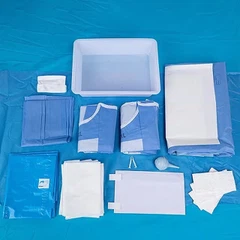
- Isolation gowns
- Protective gowns
- Disposable sleeve covers
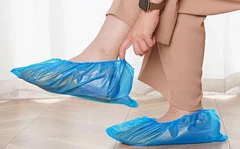
- Shoe covers
- Boot covers
For many applications, the advantage of disposable apparel is straightforward: it can be removed after use instead of requiring repeated laundering.
However, safety professionals should look beyond the word "disposable." Material construction, garment weight, seam design, closure systems, fit, breathability, and the intended application all affect how a garment performs in the workplace.
For example, a lightweight polypropylene garment may be suitable for general dust protection, while a multilayer SMS or coated material may be more appropriate when greater barrier performance is required.
The right choice depends on the actual hazard rather than simply selecting the heaviest material available.
2. Disposable Coveralls for Full-Body Protection
Among disposable PPE products, coveralls are particularly relevant for applications where workers need more extensive coverage than a gown or lab coat can provide.
A well-designed disposable coverall can cover the torso, arms, and legs while reducing exposed clothing areas.
Respiratory protection remains an important part of a workplace PPE program, particularly in environments where workers may encounter airborne particles, dust, aerosols, or other respiratory hazards.
Hands are exposed to many different workplace hazards, which makes hand protection another major PPE category.Disposable gloves may be suitable for applications where contamination control and frequent glove changes are important.
Eye injuries can result from flying particles, splashes, dust, chemical exposure, and other workplace hazards.
Depending on the risk assessment, safety professionals may consider:
- Safety glasses
- Protective goggles
- Face shields
- Splash protection
Eye and face protection should be selected according to the hazard rather than treated as interchangeable products.
For example, protection against flying particles may require a different solution from protection against liquid splashes.
Fit is also important. Protective eyewear that is uncomfortable or interferes with other PPE may discourage consistent use.
Head protection is another essential category for workplaces where workers may encounter impact, falling objects, electrical hazards, or other risks.
Depending on the application, head protection can include:
- Hard hats
- Safety helmets
- Bump caps
- Disposable caps
- Bouffant caps
Disposable caps and similar products are particularly useful in environments where hair containment and contamination control are important, such as food processing, laboratories, and certain clean environments.
These products serve a different purpose from impact-resistant head protection and should therefore not be considered substitutes for one another.
Foot protection can involve both protective footwear and disposable shoe or boot covers.
Disposable shoe covers can be useful when the primary concern is preventing dirt, dust, liquids, or contaminants from being transferred between areas.
When evaluating disposable shoe covers, buyers may want to compare:
- Material
- Slip resistance
- Waterproof performance
- Elastic opening
- Size and fit
- Sole construction
- Thickness
- Packaging
For environments with specific slip hazards, the sole design deserves particular attention.
8. Protective Apparel for Different Work Environments
One of the most important points for safety professionals is that PPE should be matched to the work environment.
A product suitable for a laboratory may not be the best choice for construction, manufacturing, food processing, maintenance, or general industrial use.
CARESTAR at NSC Safety Congress & Expo 2026
CARESTAR will be exhibiting at the NSC Safety Congress & Expo 2026 in Indianapolis.
Safety professionals, PPE distributors, procurement teams, and industrial buyers can visit CARESTAR to learn more about its range of disposable protective products and discuss sourcing requirements.
Visit CARESTAR at Booth #2205.
The company can support buyers looking for disposable protective apparel and related PPE products for different workplace applications, including disposable coveralls, gowns, masks, shoe covers, sleeve covers, lab coats, and other disposable protective products.
For buyers planning their visit, this is an opportunity to discuss not only individual products but also longer-term requirements such as sizing, packaging, OEM/ODM programs, private labeling, and supply consistency.
FAQ:
What PPE products should safety professionals look for at NSC 2026?
Safety professionals should focus on PPE products that match their workplace hazards, including protective clothing, disposable coveralls, gloves, eye and face protection, respiratory protection, head protection, and foot protection.
What should I consider when choosing disposable protective clothing?
Material, barrier requirements, breathability, seam construction, garment design, fit, closures, sizing, intended application, and applicable standards should all be considered.
Are disposable coveralls suitable for industrial applications?
Disposable coveralls can be suitable for many industrial applications involving dust, dirt, general contamination, and certain liquid exposure. The appropriate garment depends on the specific hazard and required level of protection.
How do I choose the right PPE supplier?
Compare product specifications, manufacturing capabilities, quality control, customization options, certifications or applicable standards, packaging, production capacity, and long-term supply capability rather than evaluating suppliers on price alone.
Why attend NSC Safety Congress & Expo 2026?
The event provides safety professionals and buyers with an opportunity to compare workplace safety products, meet suppliers, review new solutions, and discuss practical safety requirements across multiple PPE categories.