











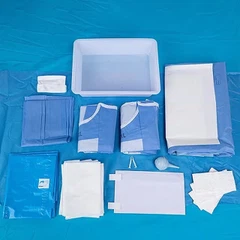




When organizations evaluate full-body PPE options, the choice between disposable coveralls and reusable fabric coveralls is one of the most common-and most consequential-procurement decisions. Many buyers base their choice solely on upfront unit price, but this narrow view often overlooks hidden operational costs, inconsistent protection over time, regulatory compliance risks, and long-term environmental impacts.
For facilities operating in healthcare, pharmaceutical manufacturing, cleanroom production, or industrial processing, selecting the right coverall strategy directly impacts worker safety, audit readiness, and total operational expenditure. This guide provides a side-by-side comparison of disposable coveralls and reusable coveralls across five critical dimensions: protective performance, total cost of ownership, regulatory compliance, environmental footprint, and ideal use cases.
Core Design Difference: Single-Use Consistency vs. Multi-Use Degradation
The fundamental gap between disposable and reusable coveralls lies in their protective performance trajectory over their lifecycle.
A disposable coverall is engineered for one-time use, with barrier properties calibrated to remain at full rated performance for the duration of a single shift or task. Because it is discarded after use, there is no wear, tear, or material degradation from laundering, abrasion, or chemical exposure. Every new disposable coverall delivers identical, factory-verified protection.
Reusable coveralls are constructed from woven or tightly knitted fabrics designed to withstand multiple wash cycles. While they meet performance specifications when new, each laundering cycle gradually breaks down fiber structure, widens pore size, and diminishes liquid and particle barrier efficiency. Without regular performance testing, most organizations cannot confirm that reusable coveralls still meet original safety standards after 10, 20, or 50 washes.
Protective Performance: Reliability Over Time
Barrier Consistency
Disposable coveralls manufactured by reputable PPE suppliers are tested to ASTM F1670 (synthetic blood penetration resistance), ASTM F1671 (blood-borne pathogen resistance), and EN 13982 (particle and chemical splash protection) standards at the point of manufacture. Each unit delivers the same level of protection, with no performance variance from shift to shift or worker to worker.
Reusable coveralls only meet published standards when brand new. Independent testing has shown that after 20 industrial wash cycles, woven coveralls can lose up to 40% of their liquid splash resistance and 25% of their particle filtration efficiency. Seams and stress points degrade even faster, creating unseen failure points in high-exposure areas.
Cross-Contamination Risk
Disposable coveralls eliminate cross-contamination between work zones, shifts, and facilities by design. Contaminated garments are contained and disposed of immediately after use, following facility biosafety protocols.
Reusable coveralls introduce multiple contamination touchpoints: removal, collection, transport to laundry, washing, sorting, storage, and redistribution. Even with proper laundering, residual chemical or biological contaminants can remain in fabric fibers, posing ongoing exposure risks for wearers and clean environments.
Total Cost of Ownership: Upfront Price vs. Hidden Expenses
The perceived cost advantage of reusable coveralls almost always disappears when full lifecycle expenses are calculated.
Disposable Coverall Cost Structure
- Higher per-unit purchase price
- Zero laundering, labor, and utility costs
- No repair or replacement of damaged garments
- Simplified inventory management with uniform bulk packaging
- No performance testing or recertification costs
- Predictable per-use cost with no budget variance
Reusable Coverall Cost Structure
- Lower initial purchase cost
- Ongoing commercial laundry expenses (water, energy, detergent, labor)
- Transportation costs between facility and laundry service
- 20–30% annual replacement rate due to tears, stains, and shrinkage
- Regular performance testing to maintain compliance
- Administrative overhead for inventory tracking and laundry scheduling
For facilities with moderate to high usage (more than 10 uses per worker per month), disposable coveralls typically deliver a lower total cost of ownership within 12–18 months, while also eliminating the safety and compliance risks of degraded reusable garments.
Regulatory Compliance & Audit Readiness
For regulated industries, documentation and traceability are non-negotiable PPE requirements.
Disposable coveralls come with batch-specific certification, lot numbers, and full manufacturing traceability. This makes OSHA inspections, FDA audits, and ISO cleanroom verifications straightforward: procurement records and product spec sheets serve as complete proof of compliance.
Reusable coveralls require ongoing documentation to remain compliant. Organizations must maintain detailed records of wash counts, periodic barrier performance tests, maintenance logs, and replacement schedules. Most small and mid-sized facilities do not have formal systems in place to track this data, leaving them vulnerable to audit findings and regulatory penalties.
In healthcare settings, medical-grade disposable coveralls hold FDA 510(k) clearance as finished devices. Reusable coveralls lose their medical device classification once they are laundered outside of the original manufacturer's validated process, making them unsuitable for patient care and isolation ward use.
Environmental Impact: Beyond the Single-Use Stereotype
The assumption that reusable coveralls are always more environmentally friendly is one of the most persistent myths in PPE procurement.
Reusable coverall laundering is resource-intensive: each industrial wash cycle consumes approximately 20–30 gallons of water, significant thermal energy for heating, and chemical detergents that contribute to wastewater discharge. Over a 50-wash lifespan, a single reusable coverall can generate a larger carbon and water footprint than 50 individual disposable coveralls.
Modern disposable coveralls have also advanced substantially in sustainability:
- Lightweight material formulations reduce overall plastic content by 30–40% compared to older designs
- Polypropylene-based disposable coveralls are fully compatible with waste-to-energy incineration, producing usable electricity without toxic byproducts
- Many manufacturers offer low-linting, recyclable nonwoven grades for cleanroom environments
For applications involving hazardous materials, biological contaminants, or chemical exposure, disposable coveralls also prevent contaminated wastewater from entering municipal treatment systems-a hidden environmental cost of laundering heavily soiled reusable garments.
Choose Disposable Coveralls If:
- Your workers face biological, chemical, or particulate contamination risks
- You operate in a regulated industry (healthcare, pharmaceutical, medical device) with strict audit requirements
- Usage rates are variable or seasonal, making fixed laundry costs inefficient
- You need consistent, verifiable protection for every worker on every shift
- Cross-contamination between departments or facilities is a critical concern