






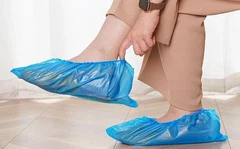






Walk into a hospital sanitation corridor or a modern food processing facility and you will often notice workers putting on disposable shoe covers before entering controlled areas. While different materials exist, CPE shoe covers have gradually become one of the most commonly used options in environments where moisture, hygiene control, and cross-contamination prevention are major concerns.
But what exactly makes CPE shoe covers so widely adopted in these industries?
Understanding the practical reasons behind their popularity requires looking beyond basic product descriptions and examining how these protective items perform in real operational environments.
The Challenge of Floor Contamination in Controlled Workspaces
In both hospitals and food manufacturing plants, floors are not simply surfaces people walk on. They are part of the overall hygiene control system.
Hospital environments frequently deal with fluids such as disinfectants, saline, or other medical liquids. Even with strict cleaning protocols, floors can become temporarily wet during sanitation procedures. When personnel move between different departments, footwear may carry microorganisms, dust, or contaminants from one zone to another.
Food processing facilities face a similar challenge. Production lines are often cleaned multiple times per day using water, detergents, and chemical disinfectants. In areas such as raw material preparation or meat processing rooms, moisture on the floor is almost unavoidable.
Without proper footwear protection, workers' shoes can quickly become a vehicle for contamination, transferring particles between work areas that should remain separated.
This is where disposable shoe covers become an important part of hygiene management.
Why CPE Material Performs Well in Wet Environments
Not all disposable shoe covers are made from the same material. Some are produced from lightweight nonwoven polypropylene, while others use polyethylene film. CPE (Chlorinated Polyethylene) offers a different set of properties that make it particularly suitable for wet workplaces.
CPE material forms a dense, flexible barrier that resists water penetration more effectively than many lightweight alternatives. Even when the floor surface is damp, the material prevents moisture from passing through to the wearer's footwear.
Another reason CPE performs well in these settings is its durability under repeated movement. Workers in hospitals and food plants rarely remain stationary. They walk long corridors, move equipment, or stand for extended periods. Thin disposable materials may tear under constant friction, especially when the floor is slightly rough.
CPE film, typically produced in thickness ranges around 30–50 microns, provides a balance between flexibility and tear resistance. This durability allows the shoe cover to maintain its protective barrier during an entire shift or sanitation cycle.
The Role of Textured Surfaces in Workplace Safety
One practical feature often overlooked outside the industry is the embossed texture found on many CPE shoe covers.
Smooth plastic surfaces can become slippery on wet floors. To reduce this risk, manufacturers commonly add a textured or embossed pattern during the film production process. These small surface patterns increase friction between the shoe cover and the floor.
In busy hospital corridors or fast-paced food processing lines, even a minor improvement in traction can help reduce the chance of slips or falls. This is one reason many facilities choose textured CPE covers instead of completely smooth plastic overshoes.
Controlling Cross-Contamination Between Work Zones
Modern hygiene systems rely heavily on zoning. Different areas inside a building may have different cleanliness requirements.
For example:
A hospital may separate public areas, patient rooms, and sterile operating spaces.
A food factory may divide raw material handling zones from packaging areas.
Employees moving between these spaces must avoid carrying contamination on their footwear. Disposable shoe covers create a simple but effective barrier. Workers can remove them when exiting one zone and replace them before entering another.
Because CPE material resists water and surface contamination effectively, these covers help ensure that particles or residues are not transferred between controlled areas.
Operational Efficiency in High-Traffic Facilities
Another reason CPE shoe covers are common in hospitals and food plants is their practicality during daily operations.
Disposable footwear protection must be easy to use. Workers often need to put them on quickly while wearing gloves or protective clothing. Elastic openings allow the covers to stretch over different shoe sizes, from lightweight work shoes to heavier safety footwear.
In high-traffic environments where hundreds or even thousands of covers may be used each day, consistent sizing and reliable elasticity become important. If the elastic band is too tight, the cover may tear during application. If it is too loose, it may slip off while walking.
Experienced manufacturers typically reinforce the elastic seam to ensure that the shoe cover stays securely in place throughout the work process.
Growing Demand for Disposable Protective Products
Global demand for disposable protective products has grown significantly over the past decade, particularly in healthcare, pharmaceutical production, and food safety industries. With stricter hygiene regulations and more frequent sanitation procedures, facilities are paying closer attention to protective equipment that helps maintain clean working environments.
Disposable CPE shoe covers have benefited from this trend because they offer a combination of waterproof protection, durability, and cost efficiency. When produced at scale, they remain an economical solution for facilities that require large daily quantities.
Companies specializing in disposable protective products, such as CARESTAR, have continued refining the design and production of CPE shoe covers to meet the needs of international customers in healthcare, food manufacturing, and industrial hygiene sectors.
With over two decades of experience in nonwoven and plastic protective products, CARESTAR supplies disposable items to distributors and medical supply companies worldwide, ensuring stable quality and reliable bulk production capacity.
A Small Product with a Significant Role in Hygiene Control
Although they may seem like a simple disposable item, shoe covers play an important role in maintaining hygiene standards in sensitive environments.
By providing a waterproof barrier, improving traction on wet floors, and helping prevent contamination between controlled areas, CPE shoe covers have become a practical solution for hospitals and food processing plants around the world.
As hygiene requirements continue to evolve, demand for reliable disposable protective equipment is likely to grow, making well-designed shoe covers an essential part of many workplace safety systems.