












What are CPE shoe covers exactly, and when do they make more sense than regular plastic or fabric alternatives? Facilities across many industries are switching to CPE for everyday foot protection, and the reasons come down to performance, durability, and total cost over time.
Breaking Down the CPE Material


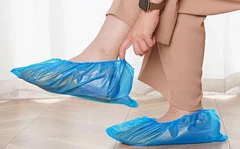
CPE stands for Chlorinated Polyethylene, which is essentially standard polyethylene that has been modified through a chlorination process. The extra chlorine molecules change the plastic's molecular structure, making it softer, more flexible, and significantly more tear-resistant than ordinary PE film. The difference is noticeable the moment you pick one up - basic PE shoe covers feel stiff and crinkly, while CPE versions have a smoother, more supple feel that moves better with your foot as you walk.
Nearly all quality CPE shoe covers feature an embossed textured pattern pressed into the sole surface. This raised texture creates friction between the cover and the floor, dramatically improving slip resistance compared to smooth plastic. A sturdy elastic band runs around the ankle opening to hold the cover securely in place, so workers do not have to bend down repeatedly to pull slipping covers back up.
Standard sizing for adult CPE shoe covers runs approximately 15 by 40 centimeters or 16 by 41 centimeters, which accommodates most shoe sizes from men's US 6 through US 13. Thickness and weight vary by grade, with light-duty options around 1.8 grams per pair up to heavy-duty industrial versions at 5.5 grams and above. Blue is the universal industry standard color, though manufacturers including CARESTAR can produce custom colors like green, white, or yellow for facilities that use color-coded zone systems.
Benefits of Choosing CPE
Facility managers who switch to CPE typically cite three main advantages over other disposable options.
The first is complete waterproof protection. Unlike non-woven PP shoe covers that allow moisture to pass straight through, CPE film forms an unbroken barrier against water, cleaning chemicals, disinfectants, and other liquids. This matters enormously in hospital corridors, food processing floors, and laboratory environments where spills and wet cleaning are part of daily operations. Staff can walk through damp areas without ending up with soaked socks or tracking contaminants between departments.
The second benefit is durability. Pound for pound, CPE resists tearing and puncturing better than standard PE. Anyone who has worn budget plastic shoe covers knows the frustration of one splitting halfway through a shift. CPE material stretches further before breaking and stands up better to regular walking, grout lines, and occasional contact with sharp edges. For full-shift wear, a single pair of CPE covers often outlasts two or three pairs of thin PE, which means actual per-shift cost can end up lower despite the slightly higher unit price.
The third advantage is improved traction. Smooth plastic shoe covers become dangerously slippery on tile, polished concrete, and wet floors. The embossed surface on CPE shoe covers adds grip that plain PE simply cannot match. For safety, switching to textured CPE often produces measurable improvements in near-miss reports.
Where CPE Shoe Covers Work Best?
Hospitals and clinical settings are the largest users by volume. Operating rooms, emergency departments, dialysis units, and isolation wards all require foot coverage to maintain hygiene standards. CPE versions are preferred in areas with frequent fluid exposure because they keep footwear dry and prevent cross-contamination between patient rooms. They integrate seamlessly with full PPE ensembles including gowns, gloves, and face shields.
Food and beverage manufacturing facilities rely heavily on CPE foot protection as well. Production floors undergo regular washdowns, and workers move between raw and finished product zones throughout the day. Waterproof shoe covers are a basic requirement for HACCP compliance in most food safety programs. The slip-resistant texture also reduces fall risks on perpetually damp concrete floors.
Cleanroom and pharmaceutical operations value CPE for its non-linting properties. Unlike fabric-based covers that shed microscopic fibers, solid CPE film releases virtually no particulates into the air. This makes it suitable for controlled environments where even tiny airborne particles can ruin production batches. Electronics manufacturing and semiconductor assembly facilities often specify anti-static CPE grades to prevent electrostatic discharge damage.
Other common applications include painting services, carpet cleaning, real estate showings, and home repair visits. Any situation where you need to protect indoor floors from outside dirt, or protect shoes from messy work conditions, disposable CPE covers provide a quick, low-cost solution.
Is CPE the Right Choice for You?
CPE shoe covers occupy a valuable middle ground between inexpensive but flimsy PE covers and more expensive heavy-duty fabric alternatives. They deliver reliable waterproofing, decent slip resistance, and all-day durability at a price that works for high-volume operations. If your current shoe covers tear too easily, do not keep water out, or cause slipping concerns, upgrading to quality CPE versions is usually a straightforward decision.

If you are evaluating suppliers for your facility, CARESTAR produces CPE shoe covers in multiple thickness grades with full certification support. Our production lines run consistent quality checks at every stage, so you receive the same dependable product from your first carton to your hundredth. Reach out to our team for sample packs and volume pricing matched to your facility's actual consumption rate.