













How to Choose the Right Surgical Gown for Different Medical Scenarios?
Selecting a surgical gown is not simply about choosing a protective garment. In real clinical environments, the choice often reflects how well a facility understands its own risk levels, workflow, and exposure conditions.
A gown that performs well in one setting may be insufficient in another. This is why many procurement issues are not caused by the product itself, but by a mismatch between the gown and the actual use scenario.

Start with the Procedure, Not the Product
One common mistake in PPE sourcing is starting from the product specification instead of the actual application.
In practice, different medical procedures create very different exposure conditions:
- A short outpatient procedure may involve minimal fluid contact
- A long surgical operation may involve continuous fluid exposure
- Emergency or trauma cases often involve unpredictable risk levels
Each of these scenarios requires a different level of protection.
Understanding Material Differences in Surgical Gowns
Most disposable surgical gowns are made from nonwoven materials, but the structure of these materials determines how they perform.
Common options include:
- PP (polypropylene): lightweight, breathable, suitable for low-risk environments
- SMS (spunbond-meltblown-spunbond): better balance between breathability and barrier protection
- Microporous or laminated materials: enhanced resistance to fluid penetration
In higher-risk procedures, materials with stronger barrier performance are preferred, especially in critical zones such as the chest and sleeves.
However, heavier protection is not always better. In long procedures, reduced breathability can lead to discomfort and fatigue, which indirectly affects performance.
Barrier Performance vs. Comfort: A Practical Trade-Off
In controlled environments, protection is essential - but so is wearability.
A gown that is too heavy or poorly ventilated may cause:
Heat buildup during long procedures
Reduced mobility
Increased fatigue for medical staff
On the other hand, a gown with insufficient barrier protection may allow fluid penetration under pressure.
This is why many modern surgical gowns are designed with zoned protection, where:
High-risk areas (front panel, sleeves) have stronger barriers
Other areas remain breathable
This approach balances safety with usability.
Design Details That Matter in Daily Use
Beyond material, small structural features can significantly affect performance.
In real hospital settings, attention is often paid to:
- Cuff design: should integrate smoothly with gloves to avoid exposure gaps
- Seam construction: reinforced or sealed seams reduce leakage risk
- Closure system: secure fastening ensures the gown stays properly positioned
- Fit and sizing: allows movement without creating stress points
Similar to protective coveralls, improper fit can lead to tearing or restricted movement during procedures.
These details are rarely highlighted in product listings but become critical during actual use.
Why Disposable Surgical Gowns Are Standard Practice ?
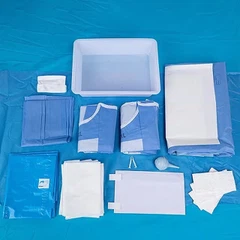
In modern healthcare systems, disposable surgical gowns are widely preferred over reusable alternatives.
The reason is not convenience alone, but risk control.
- Reusable gowns require:
- Strict washing protocols
- Controlled sterilization processes
- Continuous quality monitoring
Even then, repeated use can gradually degrade material performance.
Disposable gowns eliminate these variables. Each use begins with a new, uncontaminated product, reducing the risk of cross-infection and ensuring consistent barrier performance.
For hospitals and distributors, one of the biggest challenges is not selecting a gown - but maintaining consistency across batches.
Two shipments with identical specifications may perform differently if:
- Raw materials vary
- Production conditions change
- Quality control is inconsistent
Over time, procurement teams tend to prioritize:
- Stable material performance
- Reliable manufacturing processes
- Consistent sizing and construction
Manufacturers with long-term experience in disposable PPE, such as CARESTAR, often focus on these aspects rather than only listing technical specifications.