












Selecting an isolation gown is not just about choosing a disposable protective garment from a catalog. Different healthcare environments involve different levels of exposure, working conditions, and wearing requirements. A gown suitable for routine patient care may not be the right choice for laboratory work, environmental cleaning, or areas where frequent fluid exposure is expected.

What Factors Should Be Considered When Selecting an Isolation Gown?
Before comparing materials or prices, buyers should first understand the working environment where the gown will be used.
Expected Fluid Exposure
Fluid exposure is one of the most important factors in isolation gown selection.
In routine healthcare activities with limited exposure, a lightweight nonwoven gown may provide practical protection while remaining comfortable to wear. However, applications involving splashes, frequent contact with liquids, or higher contamination risks may require enhanced barrier performance.
Buyers should consider:
- The likelihood of liquid splashes
- The expected volume of fluid exposure
- Whether exposure is occasional or continuous
- Which parts of the body require protection
- How long the gown will be worn
A thicker material is not always the best solution. The goal should be to select a gown with performance appropriate for the actual level of risk.
Wearing Time and Breathability
Healthcare workers may wear protective garments for short procedures or throughout an extended shift. This makes comfort an important purchasing consideration.
A highly protective gown can become uncomfortable if it significantly limits airflow. Heat and moisture may accumulate inside the garment, especially in busy or warm working environments.
For longer periods of use, buyers should pay attention to:
- Fabric breathability
- Garment weight
- Freedom of movement
- Heat buildup
- Moisture management
- Overall fit
Garment Coverage
Coverage requirements can vary between applications.
Buyers should review the overall design instead of focusing only on the front material. Important areas include the torso, sleeves, wrists, neck, and back closure.
A properly designed gown should provide sufficient coverage during normal movement without becoming excessively loose or restrictive.
Questions worth asking include:
- Is the gown long enough for the intended user?
- Does the sleeve length provide adequate coverage?
- Is the back design appropriate for the application?
- Does the closure remain secure during movement?
- Does the gown maintain coverage when the wearer bends or reaches?
These practical details can have a significant effect on day-to-day usability.
How Does Isolation Gown Material Affect Performance?

Material selection influences the balance between breathability, liquid resistance, strength, softness, and cost.
Different applications may require different nonwoven constructions.
PP Isolation Gowns
Polypropylene spunbond material is widely used for lightweight disposable isolation gowns.
PP isolation gowns can offer several practical advantages:
- Lightweight construction
- Good breathability
- Comfortable wear
- Economical production
- Suitable for high-volume use
They are commonly considered for routine patient care and other lower-exposure applications where comfort and cost efficiency are important.
SMS Isolation Gowns
SMS materials use multiple nonwoven layers and can provide a useful balance between strength, breathability, and barrier performance.
Compared with basic single-layer materials, SMS may be preferred where buyers require a more robust gown while still maintaining reasonable comfort.
Common considerations include:
- Improved fabric strength
- Soft and breathable construction
- Better overall barrier characteristics
- Suitable for a range of clinical applications
The actual performance will still depend on the specific material specification and finished garment design.
PE-Coated Isolation Gowns
PE-coated nonwoven materials can provide increased resistance to liquid penetration.
These gowns may be considered when the working environment involves a greater possibility of fluid contact.
However, increased liquid resistance can also affect breathability. For this reason, buyers should consider whether the additional barrier is necessary for the intended application rather than using coated materials as a default choice for every environment.
CPE Isolation Gowns
CPE materials are commonly associated with strong moisture barrier properties.
They may be used in applications where liquid protection is a primary concern. At the same time, comfort and breathability requirements should be carefully considered when selecting this type of material.
The right material should always be matched with the actual working environment and expected duration of use.
Disposable vs. Reusable Isolation Gowns: Which Is More Practical?
There is no single answer for every facility.
The choice depends on the organization's workflow, laundering capability, storage capacity, infection-control procedures, and total operating costs.
Advantages of Disposable Isolation Gowns
Disposable isolation gowns can offer:
- Ready-to-use protection
- No laundering requirements
- Simple inventory handling
- Convenient replacement
- Consistent product specifications
- Efficient use in high-turnover environments
They can be particularly practical where fast replacement and straightforward disposal procedures are important.
Why Choose CARESTAR for Isolation Gowns?
For healthcare distributors, importers, and procurement teams looking for disposable protective products, CARESTAR offers isolation gown solutions designed for different application requirements.
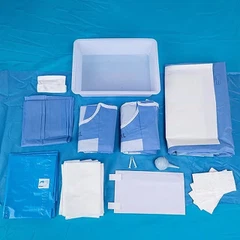
CARESTAR provides a range of disposable medical and protective products, making it possible for buyers to source isolation gowns alongside other related PPE products. Depending on project requirements, buyers can discuss material options, garment sizes, cuff styles, packaging configurations, and other specifications.

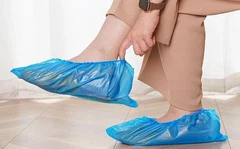
With 20 years of experience in providing hygiene solutions for the workplace, CARESTAR has become synonymous with supplying nonwoven apparel, face mask and CPE/PE shoe covers. We pride ourselves on providing our customers with high quality, competitive prices and superior customer services in the fields of Medical , Cleanroom , Food Processing and Beauty Salon .We own CE certifications. Our medical clothing and face masks meet the requirements of Medical Device Regulation (EU) 2017/745. We are the registered supplier of U.S. Food and Drug Administration.