













Isolation Gown versus Surgical Gown: Two Different Levels of Protection
If you have ever looked at a hospital supply catalogue and wondered why there are two kinds of protective garments that appear similar - you are not alone. Procurement managers, nurses, and safety officers frequently confuse isolation gowns with surgical gowns. However, picking the wrong one is not a minor mistake. It can affect infection control, patient safety during operations, and the comfort of healthcare workers. Below is a clear, practical explanation of when to use an isolation gown and when to reach for a surgical gown.
The One‑Sentence Difference
Isolation gown – Lightweight, often open at the back, designed for routine patient care and basic droplet or contact precautions.
https://www.carestarmedical.com/surgical-gown/isolation-gowns/
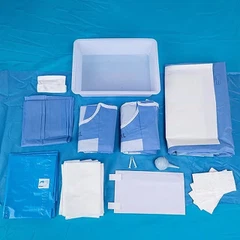
Surgical gown – Sterile, tested to strict fluid barrier standards, required for operating rooms and invasive procedures.
If you only need the headline distinction, that is it. But for anyone making purchasing decisions or writing safety protocols, the details matter.
https://www.carestarmedical.com/surgical-gown/surgical-gown-aami-pb70-level-3/
Isolation Gown: The Everyday Choice for General Care
Isolation gowns serve a specific purpose: low‑to‑moderate risk protection in routine healthcare settings. According to the United States Food and Drug Administration, non‑surgical gowns (which include isolation gowns) are Class I medical devices. Their job is to prevent the transfer of microorganisms and body fluids in minimal or low risk patient isolation situations. They are typically made from lightweight polypropylene or spunbond‑meltblown‑spunbond fabric. Isolation gowns are non‑sterile and designed for single use.
You will find isolation gowns everywhere from outpatient clinics and nursing homes to general hospital wards. During the COVID‑19 pandemic, they became one of the most widely consumed personal protective equipment items globally, precisely because they are cost‑effective and suitable for high‑turnover environments where exposure risk is low to moderate.
Key limitation: Isolation gowns are not intended for invasive procedures or situations involving high‑volume fluid exposure. They typically leave the back partially exposed - an open‑back design - and only provide coverage down to the mid‑calf area, not full lower leg protection. That open back might not matter for routine patient interaction. However, in an operating room or an infectious disease ward with multidirectional exposure, it is a significant vulnerability.
Surgical Gown: Built for the Operating Room
Surgical gowns operate under an entirely different set of rules. The FDA regulates them as Class II medical devices requiring premarket notification (510(k)). They must meet stringent performance standards, most notably the ANSI/AAMI PB70 classification system.
AAMI PB70 defines four ascending levels of fluid barrier protection.
Level 1 – Minimal fluid resistance. Suitable for basic patient care, standard isolation, and low‑risk environments. Level 1 gowns are used for routine examinations or visitor wear, but they are not generally used inside operating rooms.
Level 2 – Low fluid protection. Designed for procedures involving low‑volume, low‑pressure fluid exposure - for example, eye examinations, tonsillectomies, or routine dental work. Under FDA classification, Level 1 and Level 2 gowns are considered non‑surgical isolation gowns.
Level 3 – Moderate fluid protection. Suitable for procedures involving moderate amounts of fluid exposure and some pressure. Many general surgical procedures fall into this category. A key update in the 2025 AAMI PB70 revision now mandates Level 3 or higher gowns for all sterile procedures, eliminating Level 2 options in operating room settings.
Level 4 – Highest fluid resistance. Impervious to viral penetration. Required for high‑risk procedures involving blood, pathogens, or extensive fluid exposure - such as long surgeries, trauma cases, or any procedure where visible blood spray is anticipated.
A Level 4 surgical gown is engineered to withstand significant fluid pressure while maintaining a sterile barrier throughout hours‑long procedures. Surgical gowns also feature reinforced zones, typically the chest and sleeves, where exposure risk is highest. This design refinement comes directly from years of clinical feedback, not just regulatory checkboxes.
For situations requiring a sterile barrier and expanded coverage - such as certain isolation procedures or when handling highly infectious patients - the FDA recognises a category called surgical isolation gowns. These provide larger critical zones than traditional surgical gowns while maintaining Class II medical device status.
| Feature | Isolation Gown | Surgical Gown |
|---|---|---|
| Sterility | Non‑sterile | Sterile |
| Coverage | Partial (front torso, arms, to mid‑calf) | Partial (front torso, sleeves reinforced; back may be non‑protective) |
| Regulatory Status | FDA Class I | FDA Class II (requires 510(k)) |
| Protection System | AAMI PB70 Levels 1 to 4 (lower levels most common) | AAMI PB70 Levels 1 to 4 (Levels 3 and 4 for operating room use) |
| Primary Setting | General care, outpatient clinics, nursing homes | Operating rooms, sterile procedures |
| Back Coverage | Open back (or partially open) | May be non‑protective |
| Comfort | High (breathable, easy movement) | Moderate (reinforced zones reduce airflow) |
| Cost per unit | Low | Medium to high |
Which One Do You Actually Need?
The decision framework is simpler than many guides suggest. According to the Centers for Disease Control and Prevention guidance on protective clothing selection, the key is understanding the specific hazard and the risk of exposure in your exact work environment.
Choose an isolation gown when:
You are providing routine patient care or conducting general examinations.
Exposure risk is low to moderate, and fluid volume is minimal.
You need cost‑effective, high‑turnover personal protective equipment for daily use.
The work environment is generally clean with occasional contact precautions.
Isolation gowns excel in scenarios where worker mobility and breathability matter more than maximum barrier protection - and where the gown can be changed frequently between patients or tasks.
Choose a surgical gown when:
The procedure requires a sterile barrier (all surgical gowns are sterile).
The work involves invasive procedures where blood or body fluid exposure is likely.
Regulatory compliance with AAMI PB70 is mandated for the setting, including the 2025 standard updates.
The gown must withstand fluid pressure for extended periods.
Hospital decontamination areas and sterile processing departments now require at least Level 3 AAMI gowns under updated standards. This is a significant shift for procurement planning. Surgical gowns are clearly labelled with their AAMI level, making it easier to match the gown to the specific procedure's risk profile.