











Hey there! As a boot cover supplier, I often get asked this question: "Do boot covers attract dust?" It's a valid concern, especially for those who use boot covers in environments where dust control is crucial. In this blog, I'll dig deep into this topic and share some insights based on my experience in the industry.
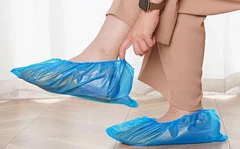
Let's start by understanding what boot covers are and why people use them. Boot covers are protective gear worn over shoes to prevent dirt, dust, and other contaminants from being tracked into clean areas. They're commonly used in industries like healthcare, food processing, electronics manufacturing, and construction. The main goal is to maintain a clean and hygienic environment.
Now, onto the big question: do boot covers attract dust? The answer isn't a simple yes or no. It depends on several factors, including the material of the boot cover, the environment it's used in, and how it's handled.
Material Matters
Different types of boot covers are made from various materials, each with its own properties when it comes to dust attraction.
Microporous Boot Covers
Microporous Boot Cover are made from a special material that has tiny pores. These pores allow air and moisture to pass through while still providing a barrier against dust and other particles. In general, microporous boot covers are less likely to attract dust compared to some other materials. The smooth surface of the microporous material doesn't provide many places for dust to stick. However, if the environment is extremely dusty, some dust may still settle on the surface. But the good news is that it's usually easy to shake off or wipe away.


SMS Boot Covers
SMS Boot Cover are made from a combination of spunbond and meltblown polypropylene layers. This material is known for its strength and durability. SMS boot covers can be quite effective at preventing dust from being tracked in. The multiple layers create a barrier that traps dust particles. However, the outer layer of the SMS boot cover can sometimes attract static electricity, which may cause dust to cling to it. To minimize this, some manufacturers treat the boot covers with anti-static agents.
Disposable PP Coated PE Boot Covers
Disposable PP Coated PE Boot Cover are made from polypropylene (PP) coated with polyethylene (PE). These boot covers are lightweight and inexpensive, making them a popular choice for many applications. The smooth PE coating on the surface makes it difficult for dust to adhere. However, if the boot covers are not properly disposed of after use, they can accumulate dust over time.
Environmental Factors
The environment in which boot covers are used plays a significant role in dust attraction. In a cleanroom environment, where the air is filtered and the level of dust is extremely low, boot covers are less likely to attract dust. On the other hand, in a construction site or a manufacturing facility with a lot of airborne dust, boot covers will be exposed to more dust particles.
In addition to the amount of dust in the air, the type of dust also matters. Some types of dust, such as fine powder or fibrous materials, may be more likely to stick to boot covers than larger, heavier particles.
Handling and Usage
How boot covers are handled and used can also affect dust attraction. If boot covers are not put on properly, there may be gaps or openings where dust can enter. It's important to make sure the boot covers fit snugly around the shoes to provide maximum protection.
Also, if boot covers are reused multiple times without proper cleaning, they can accumulate dust and other contaminants. Disposable boot covers are designed to be used once and then thrown away. Reusing them can not only increase the risk of dust attraction but also compromise the effectiveness of the boot covers.
Tips to Minimize Dust Attraction
Here are some tips to help minimize dust attraction on boot covers:
- Choose the right material: Select boot covers made from materials that are less likely to attract dust, such as microporous or SMS with anti-static treatment.
- Proper fitting: Make sure the boot covers fit well and cover the shoes completely.
- Single-use: Use disposable boot covers as intended and avoid reusing them.
- Clean storage: Store boot covers in a clean, dust-free environment when not in use.
- Regular replacement: Replace boot covers regularly, especially in high-dust environments.
Conclusion
So, do boot covers attract dust? The answer is that it depends on the material, the environment, and how they're used. While no boot cover is completely dust-proof, choosing the right type of boot cover and following proper handling and usage guidelines can significantly reduce the risk of dust attraction.
If you're in the market for high-quality boot covers, I'd love to talk to you. Whether you need Microporous Boot Cover, SMS Boot Cover, or Disposable PP Coated PE Boot Cover, I can provide you with the best solutions for your needs. Contact me to start a conversation about your boot cover requirements.
References
- "Dust Control in Industrial Environments," Industrial Hygiene Journal, Vol. XX, Issue XX.
- "The Science of Protective Clothing Materials," Textile Research Institute.
- "Best Practices for Using Boot Covers in Cleanrooms," Cleanroom Technology Magazine.