











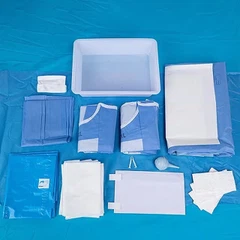



As a surgical pack supplier deeply entrenched in the medical industry, I have witnessed firsthand the paramount importance of adherence to stringent quality standards. These standards are not merely regulatory requirements but the very cornerstone of patient safety and surgical success. In this blog post, I will delve into the multifaceted quality standards that govern surgical packs, exploring the various aspects from materials and manufacturing to packaging and sterilization.
Material Quality
The journey of a high - quality surgical pack begins with the selection of materials. Each component within a surgical pack must be carefully chosen to ensure compatibility with the human body and the surgical procedure. For instance, the fabrics used in surgical drapes should be made of non - woven materials that are both breathable and have a high bacterial barrier efficiency. These materials prevent the passage of microorganisms from the patient's environment to the surgical site, significantly reducing the risk of surgical site infections (SSIs).
In addition to fabrics, the medical devices included in the surgical packs, such as scalpels, forceps, and scissors, must be made of high - grade stainless steel. This type of steel is corrosion - resistant, ensuring the longevity and sterility of these instruments. The surface finish of these instruments is also crucial; a smooth finish not only makes the instruments easier to clean and sterilize but also minimizes the risk of tissue damage during surgery.
When it comes to specific surgical packs, like the Disposable Orthopedic Surgical Pack, the materials used for orthopedic implants (if included) must meet strict biocompatibility standards. These implants are designed to be in long - term contact with the patient's body, so they need to be made of materials that will not cause allergic reactions or immune responses.
Manufacturing Processes
The manufacturing of surgical packs is a highly controlled process, following Good Manufacturing Practices (GMP). This involves strict quality control at every stage of production. In the assembly area, the environment is maintained at a high level of cleanliness to prevent contamination. Workers are required to wear appropriate protective clothing, including masks, gloves, and gowns, to minimize the introduction of foreign particles.
Each component of the surgical pack is inspected before assembly. This includes checking for defects in materials, such as holes in drapes or dull edges on instruments. The assembly process is also carefully documented to ensure traceability. In case of any quality issues, it is possible to track back the source of the problem to a specific batch or production line.
For example, in the production of Disposable Eye Surgical Pack, the precision of manufacturing is of utmost importance. The eye is a delicate organ, and any foreign object or defect in the surgical pack could have serious consequences. Therefore, manufacturers use specialized equipment and techniques to ensure the highest level of quality in the production of these packs.
Packaging
Proper packaging is essential to maintain the sterility of surgical packs from the manufacturing facility to the operating room. The packaging materials must be strong enough to withstand handling during transportation and storage, while also providing an effective barrier against microorganisms.
Sterilization indicators are often included in the packaging to confirm that the sterilization process has been successful. These indicators change color when exposed to the correct sterilization conditions, providing a visual cue that the contents of the pack are sterile.
The packaging design also needs to be user - friendly. It should allow for easy opening in the operating room without the risk of contamination. For example, Disposable Basic Surgical Pack typically comes in a design that can be quickly and easily opened by the surgical team, ensuring that they can access the necessary instruments and materials in a timely manner.
Sterilization
Sterilization is perhaps the most critical step in ensuring the safety of surgical packs. There are several methods of sterilization, including steam sterilization, ethylene oxide (EtO) sterilization, and gamma irradiation. Each method has its own advantages and limitations, and the choice of method depends on the nature of the materials in the surgical pack.
Steam sterilization is a common method for heat - stable materials. It is a fast and effective way to kill microorganisms but may not be suitable for all types of materials. EtO sterilization is used for materials that are sensitive to heat and moisture. However, it requires a longer processing time and special ventilation due to the toxic nature of ethylene oxide. Gamma irradiation is often used for single - use surgical packs because it can penetrate the packaging and sterilize the contents without affecting the integrity of the materials.
After sterilization, the surgical packs are tested to ensure that they are free of viable microorganisms. This is typically done through microbiological testing, where samples are taken from the packs and incubated to check for the growth of bacteria, fungi, and other pathogens.
Regulatory Compliance
Surgical pack suppliers must comply with a variety of national and international regulations. In the United States, the Food and Drug Administration (FDA) regulates surgical packs as medical devices. Manufacturers are required to submit pre - market notifications (510(k)) or pre - market approval (PMA) applications, depending on the risk classification of the product.
In the European Union, surgical packs must comply with the Medical Device Regulation (MDR). This regulation sets strict requirements for quality management systems, clinical evaluation, and post - market surveillance. Meeting these regulatory requirements is not only a legal obligation but also a commitment to providing safe and effective surgical packs to healthcare providers.
Quality Control and Assurance
Quality control (QC) and quality assurance (QA) are integral parts of the surgical pack manufacturing process. QC involves the inspection and testing of products at different stages of production to identify and correct any quality issues. QA, on the other hand, is a broader concept that encompasses the entire system of ensuring that the products meet the established quality standards.
Supplier audits are an important part of QA. Surgical pack suppliers often conduct audits of their raw material suppliers to ensure that they are also meeting the necessary quality standards. This includes evaluating the supplier's manufacturing processes, quality control procedures, and regulatory compliance.
In - house quality control laboratories are also essential for surgical pack suppliers. These laboratories are equipped with the necessary equipment to perform a wide range of tests, including physical, chemical, and microbiological tests. By conducting these tests, suppliers can ensure that their products meet the highest quality standards before they are released to the market.
Conclusion
The quality standards for surgical packs are complex and multi - faceted, covering everything from material selection and manufacturing processes to packaging and sterilization. As a surgical pack supplier, it is our responsibility to ensure that our products meet these standards to provide the safest and most effective products to healthcare providers and ultimately, to patients.
If you are a healthcare provider or a distributor interested in purchasing high - quality surgical packs, we invite you to contact us for a detailed discussion about our products and how they can meet your specific needs. Our team of experts is ready to assist you in sourcing the right surgical packs for your surgical procedures.

References
- "Medical Device Regulations: A Global Overview." Medical Device and Diagnostic Industry.
- "Good Manufacturing Practices for Medical Devices." World Health Organization.
- "Sterilization Technologies for Medical Devices." Journal of Healthcare Engineering.