











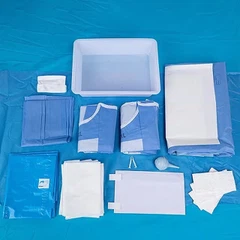



As a supplier of surgical packs, I've had the privilege of working closely with the medical community, witnessing firsthand the crucial role these packs play in surgical procedures. Surgical packs are meticulously designed to provide a comprehensive set of essential items needed for a specific type of surgery, ensuring efficiency, sterility, and convenience in the operating room. However, like any medical product, surgical packs come with their own set of limitations. In this blog post, I'll delve into these limitations, shedding light on aspects that both medical professionals and procurement officers should be aware of.
1. Customization Constraints
One of the primary limitations of surgical packs is the challenge of customization. While many surgical pack suppliers offer a range of standard packs tailored to common surgical procedures, such as the Disposable Eye Surgical Pack, Disposable Orthopedic Surgical Pack, and Disposable Laparotomy Surgical Pack, every surgical team has unique preferences and requirements.
Surgeons may have specific brands or types of instruments, drapes, or gowns that they prefer to use. Additionally, different hospitals or surgical centers may have their own protocols and standards for surgical supplies. However, customizing a surgical pack can be a complex and costly process. Suppliers need to source the requested items, ensure their compatibility with the existing pack components, and maintain the sterility and quality of the final product. This often leads to longer lead times and higher costs, which may not be feasible for all customers.
2. Limited Shelf Life
Surgical packs are designed to be sterile, and maintaining this sterility is crucial for patient safety. However, this also means that surgical packs have a limited shelf life. The sterility of a surgical pack is typically maintained through a combination of packaging materials and sterilization methods, such as gamma irradiation or ethylene oxide gas. Over time, the effectiveness of these sterilization methods can decline, and the risk of contamination increases.
As a result, surgical packs need to be stored properly and used within their expiration dates. This can be a challenge for hospitals and surgical centers, especially those with limited storage space or high turnover rates. If a surgical pack is not used before its expiration date, it needs to be discarded, which can lead to waste and increased costs.
3. Cost Considerations
The cost of surgical packs can be a significant limitation, especially for healthcare facilities with tight budgets. While surgical packs offer the convenience of having all the necessary supplies in one package, they can be more expensive than purchasing individual items separately. This is due to several factors, including the cost of packaging, sterilization, and quality control.
In addition, the cost of surgical packs can vary depending on the type of surgery, the number and quality of the items included, and the brand of the supplier. Some healthcare facilities may be tempted to cut costs by purchasing lower-quality surgical packs or by reducing the number of items included in the pack. However, this can compromise patient safety and increase the risk of surgical site infections and other complications.


4. Environmental Impact
Another limitation of surgical packs is their environmental impact. Most surgical packs are made from single-use, disposable materials, such as plastic, paper, and non-woven fabrics. While these materials are designed to be sterile and easy to use, they also contribute to the growing problem of medical waste.
Medical waste disposal is a complex and costly process, and improper disposal can have serious environmental and health consequences. In addition, the production of single-use surgical packs requires significant amounts of energy and resources, which can contribute to climate change and other environmental problems.
5. Compatibility Issues
Surgical packs are designed to be used in conjunction with other surgical equipment and supplies, such as surgical instruments, anesthesia machines, and monitoring devices. However, compatibility issues can arise between different brands and types of equipment.
For example, a surgical drape may not fit properly over a particular type of surgical table, or a gown may not be compatible with a specific type of anesthesia mask. These compatibility issues can lead to delays in the surgical procedure, increased risk of contamination, and decreased efficiency in the operating room.
6. Limited Availability of Specialized Packs
While there are many standard surgical packs available on the market, there may be limited availability of specialized packs for rare or complex surgical procedures. These specialized packs may require custom-made items or unique combinations of supplies, which can be difficult and expensive to source.
As a result, surgical teams may need to rely on individual items or create their own packs for these procedures. This can be time-consuming and increase the risk of errors or omissions.
7. Regulatory Compliance
Surgical packs are subject to strict regulatory requirements, both in the United States and around the world. These regulations are designed to ensure the safety and effectiveness of surgical packs and to protect patients from harm.
However, complying with these regulations can be a challenge for surgical pack suppliers. They need to ensure that their products meet all the relevant standards and requirements, including those related to sterilization, packaging, labeling, and quality control. Failure to comply with these regulations can result in product recalls, fines, and legal liability.
Conclusion
Despite these limitations, surgical packs remain an essential part of modern surgical practice. They offer the convenience of having all the necessary supplies in one package, which can save time and improve efficiency in the operating room. However, it's important for healthcare professionals and procurement officers to be aware of the limitations of surgical packs and to take steps to mitigate these limitations.
When selecting a surgical pack supplier, it's important to choose a company that has a proven track record of quality and reliability. Look for a supplier that offers a wide range of standard packs, as well as the ability to customize packs to meet your specific needs. In addition, consider the supplier's commitment to sustainability and environmental responsibility.
If you're interested in learning more about our surgical packs or would like to discuss your specific requirements, please don't hesitate to contact us. We're here to help you find the best solutions for your surgical needs.
References
- Association for the Advancement of Medical Instrumentation (AAMI). (2019). ST79: Comprehensive guide to steam sterilization and sterility assurance in health care facilities.
- Centers for Disease Control and Prevention (CDC). (2019). Guidelines for environmental infection control in health-care facilities.
- Food and Drug Administration (FDA). (2020). Medical device regulation in the United States.
- World Health Organization (WHO). (2018). Guidelines on safe and sustainable healthcare waste management.