











Hey there! As a boot cover supplier, I often get asked how to tell if a boot cover fits properly. It's a crucial question, especially since a well - fitting boot cover can make a huge difference in terms of functionality, comfort, and safety. So, let's dive right in and explore the key aspects of checking if a boot cover fits like a glove.
The Basics of Boot Cover Fit
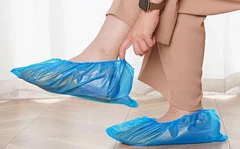
First off, let's talk about the overall look. When you put on a boot cover, it should sit snugly on your boot without any major gaps or sagging. A loose - fitting boot cover can easily come off while you're moving around, which is not only annoying but can also pose a safety risk in certain work environments. On the other hand, an overly tight boot cover can restrict your movement and cause discomfort.
One of the first things to check is the length. The boot cover should reach up to the appropriate height on your leg. For most standard boot covers, they should cover the ankle area at least. If you're working in a more hazardous environment, you might want a taller boot cover that goes up to the calf. This helps protect your legs from spills, debris, and other potential hazards.
Checking the Width and Circumference
The width of the boot cover is just as important as the length. It should be wide enough to fit over your boot without stretching too much. You can check this by looking at how the boot cover wraps around the sides of your boot. If it's too narrow, you'll notice that it's pulling tightly, and you might even see some bulging or bunching. This can not only be uncomfortable but can also lead to the boot cover tearing more easily.
To get a better idea of the circumference, you can measure around the widest part of your boot. Then, compare this measurement with the specifications provided by the boot cover supplier. Most suppliers will list the size range that each boot cover is designed to fit. For example, a size medium boot cover might be suitable for boots with a circumference between 10 - 12 inches.
Looking at the Material Stretch
The material of the boot cover plays a big role in how it fits. Some materials, like Microporous Boot Cover, have a certain amount of stretch. This can be a great advantage as it allows the boot cover to conform to the shape of your boot more easily. However, you still need to make sure that the stretch is within a reasonable limit.


If the material stretches too much, the boot cover might lose its shape and become loose over time. On the other hand, if it has very little stretch, it might be difficult to put on and take off, and it could also feel restrictive. When you're trying on a boot cover made of a stretchy material, gently tug on it to see how it responds. It should stretch enough to fit over your boot but then bounce back to its original shape when you let go.
Considering the Sole Fit
The sole of the boot cover is another critical area to check. It should match the shape of your boot's sole as closely as possible. A well - fitting sole will provide better traction and stability, which is especially important if you're walking on slippery surfaces.
When you put on the boot cover, look at how it lays on the sole of your boot. It should cover the entire sole without any wrinkles or folds. If the sole of the boot cover is too big, it might bunch up under your foot, which can be uncomfortable and increase the risk of tripping. If it's too small, it won't provide adequate protection.
Comfort and Mobility
Comfort is a key factor when it comes to boot cover fit. You should be able to move your feet and legs freely without feeling any tightness or restriction. Try walking around a bit while wearing the boot cover. Notice if you can flex your ankles and take normal steps without any issues.
If you're going to be on your feet for long periods, make sure the boot cover doesn't rub against your skin or cause any pressure points. You might also want to consider the breathability of the material. Some boot covers, like PE Boot Cover, are designed to be more breathable, which can help keep your feet cool and dry.
Different Types of Boot Covers and Their Fit
There are various types of boot covers available, each with its own unique fit characteristics. For example, Disposable PP Coated PE Boot Cover are often used in industries where hygiene is a top priority. These boot covers are usually designed to be a one - size - fits - most, but you still need to make sure they fit properly.
Disposable boot covers are typically made of lightweight materials, so they should be easy to put on and take off. However, they still need to provide a secure fit to prevent any contamination. Reusable boot covers, on the other hand, might be made of more durable materials and can be adjusted to fit more precisely.
Final Checks
Before you decide that a boot cover fits properly, do a final visual inspection. Look at the overall appearance of the boot cover on your boot. It should look smooth and well - aligned. Check for any signs of wear or damage, especially at the seams and edges.
If possible, try doing some light physical activity while wearing the boot cover. This could be something as simple as bending down or climbing a few stairs. This will give you a better idea of how the boot cover holds up during movement.
Why Proper Fit Matters
A properly fitting boot cover offers several benefits. In a work environment, it can improve safety by reducing the risk of slips, trips, and falls. It also provides better protection against contaminants, chemicals, and other hazards.
From a comfort perspective, a well - fitting boot cover allows you to focus on your work without being distracted by discomfort. It can also increase the lifespan of the boot cover, as it's less likely to tear or wear out prematurely.
Contact Us for the Right Fit
If you're still unsure about which boot cover is the right fit for you, don't hesitate to reach out. As a boot cover supplier, we have a team of experts who can help you find the perfect boot cover for your needs. Whether you're in the healthcare industry, manufacturing, or any other field that requires boot covers, we've got you covered.
We offer a wide range of boot covers in different sizes, materials, and styles. So, whether you need a Microporous Boot Cover for its breathability or a Disposable PP Coated PE Boot Cover for its hygiene benefits, we can provide you with high - quality products that fit properly.
Get in touch with us to start a conversation about your boot cover requirements. We're here to make sure you get the best - fitting boot covers for your specific situation.
References
- Industry standards for personal protective equipment (PPE)
- Manufacturer's guidelines for boot cover sizing and fit