











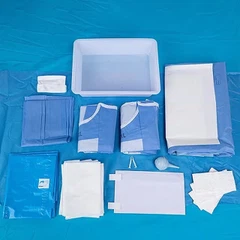



As a dedicated supplier of surgical packs, I often encounter inquiries regarding the frequency of surgical pack updates. This topic is of paramount importance as it directly impacts patient safety, surgical efficiency, and the overall quality of healthcare services. In this blog post, I will delve into the factors that influence how often surgical packs are updated and provide insights based on my experience in the industry.
Understanding Surgical Packs
Before discussing the update frequency, it's essential to understand what surgical packs are. Surgical packs are pre - assembled sets of medical supplies and instruments required for a specific surgical procedure. These packs are designed to streamline the surgical process, ensuring that all necessary items are readily available in a sterile environment. For example, a Disposable Laparotomy Surgical Pack contains items such as drapes, sponges, scalpels, and forceps tailored for laparotomy surgeries. Similarly, a Disposable Orthopedic Surgical Pack is customized for orthopedic procedures, and a Disposable Eye Surgical Pack is specific to eye surgeries.


Factors Influencing Update Frequency
Technological Advancements
One of the primary drivers for updating surgical packs is technological advancements. The medical field is constantly evolving, with new materials, instruments, and techniques emerging regularly. For instance, the development of new types of surgical sutures that are more biocompatible and have better wound - healing properties can prompt an update to the surgical pack. Similarly, advancements in minimally invasive surgery have led to the introduction of specialized instruments that need to be included in relevant surgical packs. As a supplier, we closely monitor these technological trends and work with medical professionals to ensure that our surgical packs incorporate the latest and most effective tools.
Regulatory Requirements
Regulatory bodies play a crucial role in determining the update frequency of surgical packs. These organizations, such as the Food and Drug Administration (FDA) in the United States, set strict standards for medical devices and supplies. Any changes in these regulations can necessitate an update to the surgical packs. For example, if new sterilization requirements are introduced, the packaging materials or the sterilization process of the surgical pack may need to be modified. Failure to comply with these regulations can result in serious consequences for both the healthcare providers and the suppliers. Therefore, we stay up - to - date with all regulatory changes and make the necessary adjustments to our products in a timely manner.
Clinical Evidence and Research
Clinical evidence and research findings also influence how often surgical packs are updated. New studies may reveal that certain items in a surgical pack are not as effective as previously thought, or that the inclusion of additional items can improve patient outcomes. For example, research might show that using a particular type of antimicrobial drape reduces the risk of surgical site infections. In such cases, we work with healthcare facilities to incorporate these evidence - based changes into the surgical packs. By relying on scientific research, we can ensure that our products are not only safe but also contribute to better patient care.
Feedback from Healthcare Providers
Feedback from healthcare providers is invaluable in determining the update frequency of surgical packs. Surgeons, nurses, and other medical staff who use the surgical packs on a daily basis have first - hand experience with their functionality. They can provide insights into what items are missing, what items are not working well, or what improvements can be made. For example, a surgeon might suggest that a particular instrument in the pack is difficult to handle, or that the layout of the pack could be more ergonomic. We actively seek feedback from our customers and use it to make continuous improvements to our surgical packs. By listening to the end - users, we can ensure that our products meet their practical needs.
Typical Update Intervals
While there is no one - size - fits - all answer to how often surgical packs are updated, we can provide some general guidelines based on our experience.
Minor Updates
Minor updates to surgical packs, such as changes in packaging design or the addition of a small accessory, can occur every 1 - 2 years. These updates are often driven by feedback from healthcare providers or minor technological improvements. For example, if a new type of label is developed that is more resistant to sterilization processes, we might update the labels on our surgical packs.
Major Updates
Major updates, which involve significant changes to the contents or the design of the surgical pack, typically occur every 3 - 5 years. These updates are usually triggered by major technological advancements, regulatory changes, or substantial clinical evidence. For example, the introduction of a new surgical technique that requires a completely different set of instruments may lead to a major overhaul of the relevant surgical pack.
Ensuring a Smooth Update Process
As a surgical pack supplier, we understand the importance of ensuring a smooth update process for our customers. When we make changes to our surgical packs, we communicate these changes clearly and in advance to our clients. We provide detailed information about the reasons for the update, the new features of the pack, and any training or support that may be required. We also work closely with healthcare facilities to ensure that the transition to the updated surgical pack is seamless. This may involve providing samples for evaluation, conducting in - house training sessions, or offering technical support during the initial implementation phase.
Conclusion
In conclusion, the update frequency of surgical packs is influenced by a variety of factors, including technological advancements, regulatory requirements, clinical evidence, and feedback from healthcare providers. While minor updates may occur every 1 - 2 years, major updates typically happen every 3 - 5 years. As a supplier, we are committed to staying at the forefront of these changes and providing our customers with high - quality, up - to - date surgical packs.
If you are interested in learning more about our surgical packs or would like to discuss potential updates for your specific needs, we encourage you to reach out to us. We are always ready to engage in a productive conversation and work together to meet your surgical supply requirements.
References
- American Hospital Association. (2023). Best Practices for Surgical Supply Management.
- World Health Organization. (2022). Guidelines for Sterilization and Disinfection in Healthcare Facilities.
- Journal of Surgical Research. Various issues on surgical innovation and product development.