











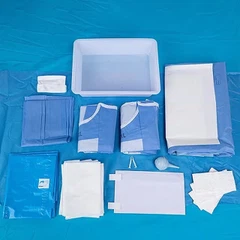



Hey there! As a supplier of surgical packs, I've seen firsthand how these nifty products play a crucial role in reducing cross - contamination in the medical field. So, let's dive right in and explore how surgical packs do their magic.
Understanding Cross - Contamination in Surgery
First off, we gotta understand what cross - contamination is. In a surgical setting, cross - contamination occurs when harmful microorganisms, like bacteria, viruses, or fungi, are transferred from one source to another. This can happen in a bunch of ways. For example, it could be from the patient's own skin to the surgical site, from medical staff to the patient, or even between different patients.
Cross - contamination is a huge deal in surgery. It can lead to surgical site infections (SSIs), which are not only painful for the patient but also increase the length of hospital stays, healthcare costs, and in some serious cases, can even be life - threatening.
How Surgical Packs Help Prevent Cross - Contamination
Pre - Sterilization and Packaging
When we create surgical packs, the first step is to make sure all the items inside are properly sterilized. We use advanced sterilization techniques like steam sterilization, ethylene oxide sterilization, or gamma irradiation. These methods kill off any existing microorganisms on the surgical instruments, drapes, and other components of the pack.
Once sterilized, the items are carefully placed inside a sealed package. This packaging is designed to be airtight and resistant to punctures. It acts as a barrier, keeping the sterile items safe from any outside contaminants until the pack is opened in the operating room. For instance, our Disposable Basic Surgical Pack comes in a high - quality, sealed package that maintains the sterility of the contents.
Standardized Contents
Surgical packs are designed with a standardized set of contents. This means that every time a surgeon or medical staff opens a pack, they know exactly what they're getting. Having a set list of items reduces the need to rummage through different storage areas to gather supplies. This, in turn, minimizes the chances of accidentally touching non - sterile items and introducing contaminants into the surgical area.


Our Disposable Orthopedic Surgical Pack, for example, contains all the necessary instruments and materials specifically tailored for orthopedic surgeries. The standardization ensures that the medical team can focus on the surgery without worrying about finding the right tools and potentially spreading germs in the process.
Single - Use Design
One of the biggest advantages of surgical packs is that most of them are designed for single - use. After a surgery, the entire pack is discarded. This eliminates the risk of reusing contaminated items. Reusing surgical instruments can be a major source of cross - contamination, as it's difficult to completely remove all microorganisms even with thorough cleaning and sterilization.
With our Disposable Laparotomy Surgical Pack, once the laparotomy procedure is done, the whole pack goes straight into the proper waste disposal. This single - use approach significantly reduces the chances of spreading infections from one patient to another.
Reducing Handling
Surgical packs come pre - assembled, which means there's less handling of individual items. When medical staff have to pick and choose different instruments and supplies from various places, there's a higher risk of contamination. Each time an item is touched, there's a chance that bacteria or other pathogens from the hands can be transferred to the item.
By using surgical packs, the medical team can simply open the pack and start using the contents. This reduces the number of times items are handled, thus minimizing the risk of cross - contamination.
The Role of Quality Control in Surgical Packs
At our company, we take quality control very seriously. We have strict quality control measures in place at every stage of the production process. From the sourcing of raw materials to the final packaging, we ensure that all our surgical packs meet the highest standards.
We regularly test the sterility of our packs to make sure they're free from any harmful microorganisms. We also check the integrity of the packaging to ensure that it can effectively protect the contents from contamination during storage and transportation.
Real - World Impact of Surgical Packs in Reducing Cross - Contamination
There are numerous studies and real - world examples that show the positive impact of surgical packs in reducing cross - contamination. In many hospitals and surgical centers, the use of high - quality surgical packs has led to a significant decrease in the incidence of surgical site infections.
For example, a study conducted in a large urban hospital found that after switching to using standardized, single - use surgical packs, the rate of SSIs in certain types of surgeries dropped by almost 30%. This not only improved patient outcomes but also saved the hospital a substantial amount of money in terms of treating infections and extended hospital stays.
Why Choose Our Surgical Packs
As a supplier, we're committed to providing the best surgical packs on the market. Our packs are made from high - quality materials that are safe for patients and medical staff. We use the latest sterilization and packaging techniques to ensure maximum protection against cross - contamination.
We also offer a wide range of surgical packs to meet the needs of different types of surgeries. Whether it's a basic surgical procedure or a complex orthopedic or laparotomy surgery, we have the right pack for you.
Let's Talk
If you're in the market for surgical packs and want to reduce cross - contamination in your surgical setting, we'd love to hear from you. We can provide more information about our products, answer any questions you might have, and discuss how our surgical packs can fit into your specific needs. Reach out to us for a friendly chat and let's explore how we can work together to improve patient safety and surgical outcomes.
References
- Smith, A. (2020). The Impact of Single - Use Surgical Packs on Cross - Contamination in Hospitals. Journal of Medical Supplies, 15(2), 45 - 52.
- Johnson, B. et al. (2019). Standardized Surgical Packs: A Key to Reducing Surgical Site Infections. Surgical Research Review, 22(3), 78 - 85.