










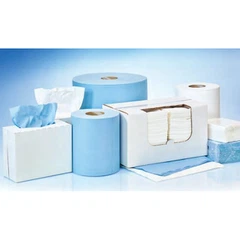
Hey there! As a supplier of aprons in roll, I often get asked if these aprons have a good absorption capacity. Well, let's dive right into it and find out.
First off, let's talk about what aprons in roll are. They're basically long, continuous strips of aprons that are rolled up for easy storage and dispensing. You can cut them to the size you need, which makes them super convenient for all sorts of industries, from food service to manufacturing.
Now, when it comes to absorption capacity, it really depends on the material the apron is made of. There are a few common materials used for aprons in roll, and each has its own pros and cons when it comes to soaking up liquids.
Nonwoven Aprons
Nonwoven aprons are a popular choice for many businesses. They're made from fibers that are bonded together rather than woven, which gives them a unique texture and set of properties. Nonwoven Apron
One of the great things about nonwoven aprons is that they can have a decent absorption capacity. The fibers in nonwoven materials can trap and hold liquids, making them suitable for tasks where you might encounter spills or splashes. For example, in a kitchen setting, they can soak up water, oil, and other cooking-related liquids.
However, the absorption capacity of nonwoven aprons can vary depending on the specific type of nonwoven material used. Some nonwoven fabrics are designed to be more absorbent than others. Thicker nonwoven aprons generally have better absorption because they have more fibers to hold the liquid. But keep in mind that once they're saturated, they won't be able to absorb any more, and you might need to replace them.
PVC Aprons
PVC, or polyvinyl chloride, is a synthetic plastic material. PVC Apron PVC aprons are known for their durability and resistance to chemicals and water. But when it comes to absorption, they're not the best option.
PVC is a non - absorbent material. It's designed to repel liquids rather than soak them up. So, if you're looking for an apron to absorb spills, PVC aprons might not be the way to go. However, they're great for situations where you need to protect yourself from splashes and spills without having the liquid penetrate the apron. For example, in a chemical laboratory or a car repair shop, a PVC apron will keep the liquids on the surface, and you can simply wipe them off.


HDPE Aprons
HDPE, or high - density polyethylene, is another plastic material used for aprons in roll. HDPE Apron Like PVC, HDPE aprons are also non - absorbent.
HDPE is a strong and lightweight material. It's resistant to moisture, chemicals, and abrasion. These aprons are often used in industries where you need to protect against wet conditions but don't require absorption. For instance, in a fishing or farming environment, an HDPE apron will keep you dry by preventing water from getting through, but it won't soak up any water that comes into contact with it.
Factors Affecting Absorption
Apart from the material, there are a few other factors that can affect the absorption capacity of aprons in roll.
The thickness of the apron plays a big role. Thicker aprons generally have more material to hold the liquid, so they can absorb more. Also, the surface area of the apron matters. A larger apron will have more space to soak up liquids.
The type of liquid you're dealing with is also important. Some liquids, like water, are easier to absorb than others. Oils and viscous liquids might not be absorbed as well, even by absorbent aprons.
Real - World Applications
Let's take a look at some real - world scenarios to see how the absorption capacity of aprons in roll comes into play.
In a food processing plant, workers often deal with water, juices, and other food - related liquids. Nonwoven aprons are a good choice here because they can absorb these liquids and keep the workers dry and clean. If a worker accidentally spills some juice, the nonwoven apron will soak it up, preventing it from getting on their clothes or the food products.
On the other hand, in a painting workshop, where workers are dealing with paint and solvents, PVC or HDPE aprons are more appropriate. These non - absorbent aprons will prevent the paint and solvents from soaking into the apron and potentially causing harm to the worker.
Making the Right Choice
So, how do you decide which apron in roll is right for you? It all boils down to your specific needs.
If you need an apron with good absorption capacity, nonwoven aprons are your best bet. They're suitable for tasks where you'll be dealing with a lot of liquids that you want to soak up.
If you're more concerned about protecting yourself from spills and splashes without absorption, then PVC or HDPE aprons are the way to go. They'll keep the liquids on the surface and can be easily cleaned.
As a supplier of aprons in roll, I'm here to help you make the right choice. Whether you're a small business owner or part of a large corporation, I can provide you with high - quality aprons that meet your requirements.
If you're interested in purchasing aprons in roll, I'd love to have a chat with you. We can discuss your specific needs, the quantity you need, and any other details. Just reach out, and we can start the conversation about getting you the perfect aprons for your business.
References
- "Textile Materials and Their Selection for Aprons" - Journal of Industrial Textiles
- "Properties of PVC and HDPE in Protective Clothing" - Plastics and Polymers Research
So, there you have it. I hope this blog has given you a better understanding of the absorption capacity of aprons in roll. If you have any questions or want to learn more, don't hesitate to get in touch!