











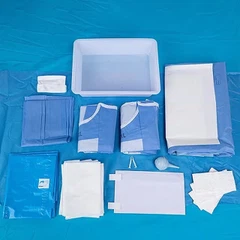



In the global healthcare landscape, the question of whether surgical packs can be effectively used in developing countries is both timely and crucial. As a supplier of surgical packs, I've witnessed firsthand the potential impact these products can have on healthcare delivery in regions with limited resources. This blog post aims to explore the viability, challenges, and opportunities associated with the use of surgical packs in developing countries.
The Need for Surgical Packs in Developing Countries
Developing countries often face a significant burden of surgical diseases. According to the World Health Organization (WHO), a large proportion of the global disease burden can be addressed through surgical interventions. However, these countries frequently lack the necessary infrastructure, resources, and supplies to provide adequate surgical care. Surgical packs can play a vital role in bridging this gap.
Surgical packs are pre - assembled sets of medical supplies required for a specific surgical procedure. They offer several advantages. Firstly, they save time in the operating room. In busy healthcare facilities in developing countries, where staff may be overstretched, having a pre - packed set of supplies ready to use can streamline the surgical process. For example, a Disposable Laparotomy Surgical Pack contains all the essential items needed for a laparotomy procedure, eliminating the need for nurses and surgeons to search for individual components.
Secondly, surgical packs ensure consistency in the quality and quantity of supplies. This is particularly important in regions where there may be variability in the availability and quality of individual surgical items. By using a standardized surgical pack, healthcare providers can be more confident in the materials they are using, which can ultimately lead to better surgical outcomes.
Viability of Surgical Packs in Developing Countries
One of the key factors contributing to the viability of surgical packs in developing countries is cost - effectiveness. Disposable surgical packs, such as the Disposable Orthopedic Surgical Pack, can be more cost - effective in the long run compared to reusing individual surgical instruments. Reusing instruments requires extensive sterilization processes, which can be resource - intensive in terms of water, energy, and labor. Disposable packs eliminate the need for these processes, reducing the overall cost of surgical procedures.
Another aspect is the ease of storage and transportation. Surgical packs are compact and can be easily stored in limited - space healthcare facilities. They are also less prone to damage during transportation compared to individual instruments. This is especially important in developing countries, where transportation infrastructure may be poor, and storage facilities may be basic.
However, there are also challenges to the widespread use of surgical packs in developing countries. One major challenge is affordability. Despite the long - term cost - effectiveness, the upfront cost of purchasing surgical packs may be prohibitive for some healthcare facilities in developing countries. Additionally, there may be limited access to financing options for these facilities, making it difficult to invest in surgical packs.
Addressing the Challenges
To overcome the affordability issue, suppliers can work with international organizations, governments, and non - profit groups to develop financing models and subsidies. For example, some suppliers offer bulk - purchasing discounts to healthcare facilities in developing countries. International donors can also play a role by providing grants or loans specifically for the purchase of surgical packs.
Another challenge is the lack of awareness and training among healthcare providers in developing countries. Many healthcare workers may be accustomed to using individual surgical instruments and may not be familiar with the benefits of surgical packs. To address this, suppliers can collaborate with local healthcare institutions to provide training programs on the use and advantages of surgical packs. These programs can include hands - on demonstrations, theoretical lectures, and case studies.
Opportunities for Growth
The demand for surgical packs in developing countries is expected to grow in the coming years. As these countries continue to invest in improving their healthcare systems, there will be an increasing need for high - quality surgical supplies. This presents an opportunity for suppliers to expand their market presence in developing regions.
In addition, the growing trend towards minimally invasive surgery in developing countries also creates a demand for specialized surgical packs. For example, the Disposable Eye Surgical Pack is designed for eye surgeries, which are becoming more common as the prevalence of eye diseases increases. Suppliers can develop and market these specialized packs to meet the specific needs of developing countries.


Conclusion
In conclusion, surgical packs have great potential for use in developing countries. They offer numerous benefits in terms of time - saving, consistency, cost - effectiveness, and ease of storage and transportation. However, challenges such as affordability and lack of awareness need to be addressed. By working together with international organizations, governments, and local healthcare providers, suppliers can help to overcome these challenges and ensure that surgical packs are accessible to those who need them most.
If you are interested in learning more about our surgical packs or discussing potential procurement opportunities, please reach out. We are committed to providing high - quality surgical packs at competitive prices and are eager to contribute to the improvement of surgical care in developing countries.
References
- World Health Organization. "Global Initiative for Emergency and Essential Surgical Care." World Health Organization, 2015.
- Meara, J. G., Leather, A. J., & Hagander, L. "Global Surgery 2030: evidence and solutions for achieving health, welfare, and economic development." The Lancet, 2015, 386(10011), 569 - 624.
- "Surgical Instrument Management in Developing Countries." International Journal of Healthcare Management, 2018, 11(3), 177 - 183.